

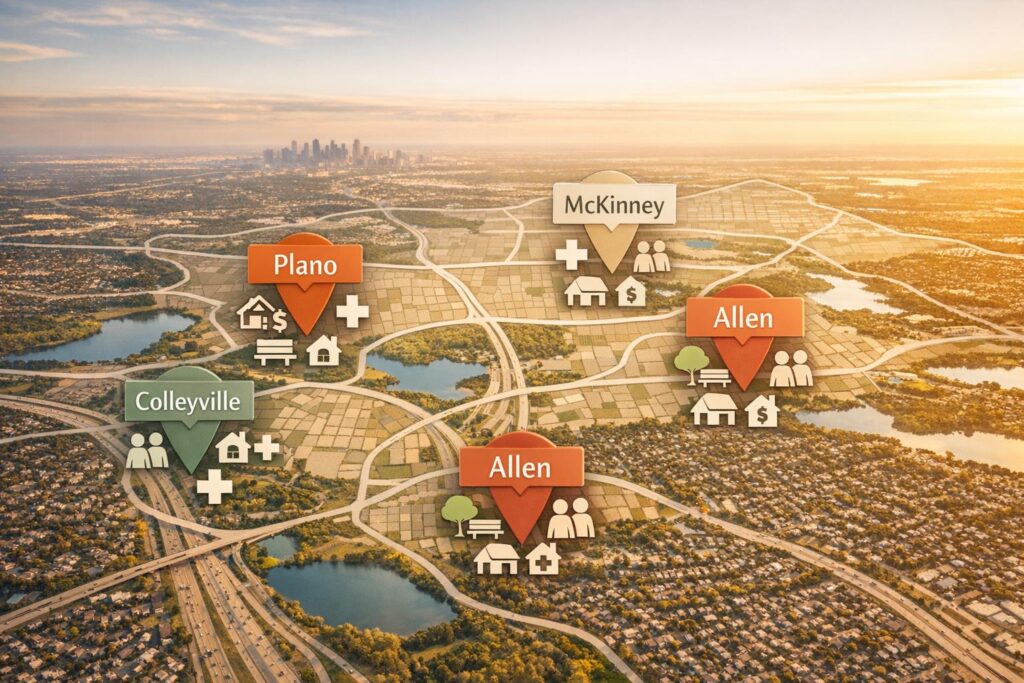
Looking to retire in the Dallas-Fort Worth area? Here’s the deal: DFW offers a mix of affordability, healthcare access, and recreation, making it a top spot for retirees. With no state income tax and a cost-of-living index of 94, your savings can stretch further here. Plus, the region boasts top-tier healthcare facilities, mild winters, and plenty of outdoor activities.
We break down four standout neighborhoods – Plano, McKinney, Allen, and Colleyville – each offering unique perks:
- Plano: Great healthcare access, abundant amenities, and low housing costs relative to income.
- McKinney: Affordable with a historic downtown and strong community vibe.
- Allen: Quiet, community-focused living with modern conveniences.
- Colleyville: Upscale, tranquil, and ideal for those seeking a refined lifestyle.
Quick Comparison
| Neighborhood | Pros | Cons |
|---|---|---|
| Plano | Top healthcare, plenty of parks, vibrant activities | Higher cost of living, traffic |
| McKinney | Affordable housing, historic charm, low crime | Long commute to Dallas, highway congestion |
| Allen | Peaceful, strong community, good amenities | Limited cultural options, traffic |
| Colleyville | Luxury living, serene atmosphere, safety | High cost of living, quieter social scene |
Each neighborhood caters to different priorities – whether it’s affordability, amenities, or upscale living. Ready to find your perfect fit? Let’s dive into the details.
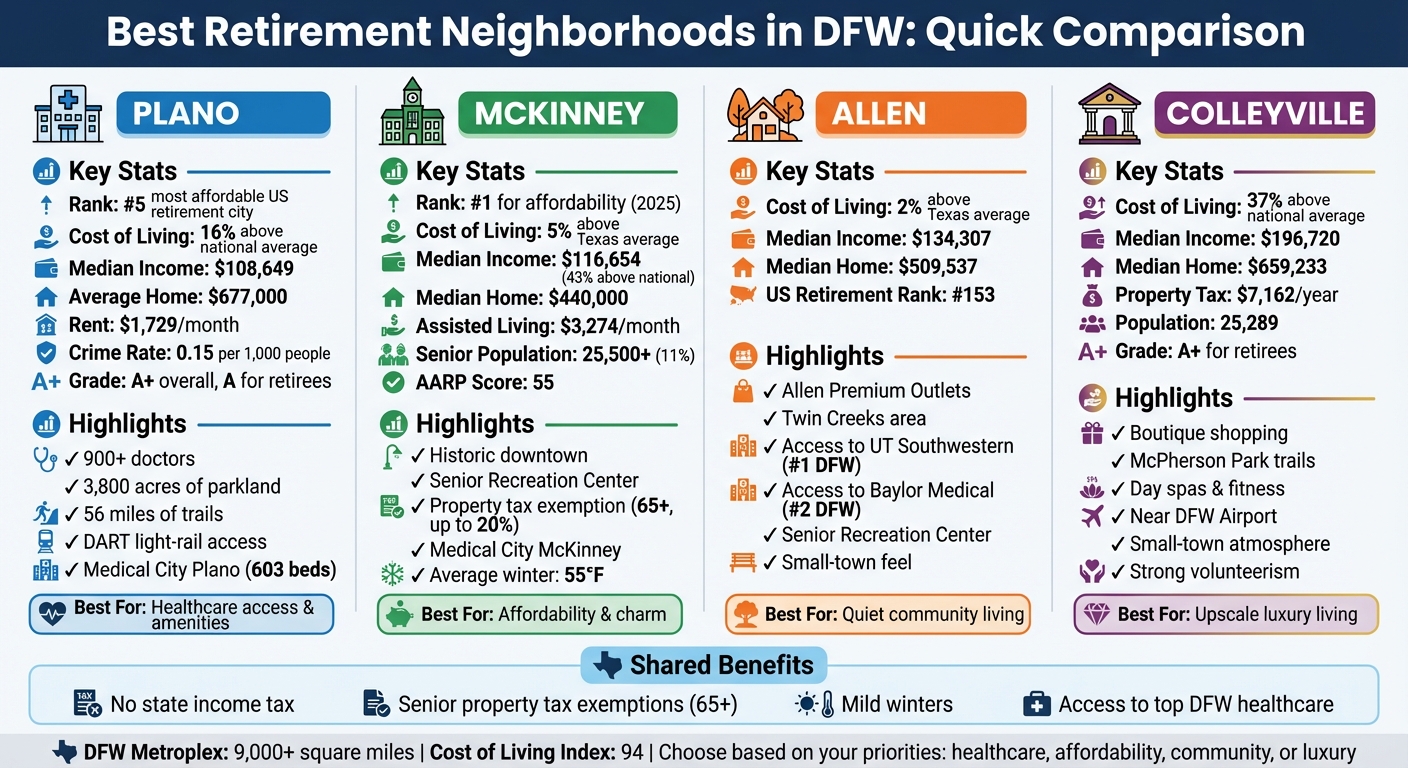
DFW Retirement Neighborhoods Comparison: Plano, McKinney, Allen, and Colleyville
Top 7 Best Retirement Communities & Neighborhoods in Dallas, TX
1. Plano
Plano ranks as the 5th most affordable city in the United States for retirement, offering retirees a balance between cost and quality of life. While the city’s cost of living is about 16% higher than the national average, its affordability is driven by Texas’s tax-friendly policies and a strong income-to-housing-cost ratio.
Affordability
Plano stands out for its low housing costs relative to income, earning it the 2nd spot among the 100 largest U.S. cities in this category. Despite higher living expenses, the city’s median household income of $108,649 (as of 2023) and housing options make it manageable for retirees. Homes are available at various price points, with the average home costing around $677,000 and many three-bedroom ranch-style homes priced under $400,000. Renters can expect an average monthly rent of $1,729.
Plano’s economy is another factor in its affordability. Housing over 25 corporate headquarters, the city enjoys a strong economic base that funds public amenities while keeping property taxes reasonable. This financial stability supports an active, enjoyable lifestyle for residents.
Access to Amenities
Plano offers an impressive range of recreational and shopping opportunities. With over 3,800 acres of parkland, 56 miles of trails, and the 200-acre Arbor Hills Nature Preserve showcasing three distinct ecosystems, outdoor enthusiasts have plenty to explore. The city also features more than 70 shopping centers, providing convenient retail options.
Transportation is another highlight. The Dallas Area Rapid Transit (DART) light-rail system connects Plano to downtown Dallas, making urban attractions easily accessible. For seniors, DART Rides offers specialized transportation at affordable rates: $1.85 per mile, $0.18 per minute, and a $3.49 drop fee. For cultural outings close to home, the Haggard Park Historic District hosts venues like the Courtyard Theater, Cox Building Playhouse, and McCall Plaza.
Healthcare Proximity
Plano excels in healthcare access, a critical factor for retirees. Medical City Plano, a 603-bed acute care facility and Level I Trauma Center, provides advanced treatments for cardiac, brain, and spine conditions. Additionally, Texas Health Presbyterian Hospital Plano ranks as one of the top hospitals in the Dallas-Fort Worth area (#7). The city also offers resources like the Wellness Center For Older Adults, rehabilitation facilities, and assisted living options to ensure comprehensive care.
Community Atmosphere
Plano’s welcoming community atmosphere is another reason it appeals to retirees. Niche awarded the city an "A+" overall grade and an "A" for being "Good for Retirees" in 2025. Safety is a standout feature, with the violent crime rate in 2024 at just 0.15 incidents per 1,000 people, and property crime hitting its lowest level since 1993 after an 11.9% drop. Combined with its suburban charm and extensive amenities, Plano creates a secure and vibrant environment perfect for retirement.
2. McKinney
McKinney stands out as a top choice for retirees, offering a mix of affordability and quality living. In fact, it earned the No. 1 spot for affordability in a 2025 report on U.S. cities. With a median household income of $116,654 – 43% above the national average – and a cost of living estimated at $75,348, McKinney strikes a solid balance between income and expenses.
Affordability
Housing in McKinney provides excellent value, with the median property value around $440,000. While the city’s cost of living is about 5% higher than the Texas average, it remains more budget-friendly compared to nearby suburbs like Frisco (18% above the national average) and Colleyville (37% above). Communities like Del Webb at Trinity Falls offer resort-style amenities, making it an attractive option for retirees.
Access to Amenities
McKinney’s historic downtown is a lively hub filled with walkable shops, restaurants, and the Performing Arts Center. For active retirees, the McKinney Senior Recreation Center offers a variety of activities, including a pool, water aerobics, age-friendly sports, and organized outings. Nature lovers can explore the Heard Natural Science Museum & Wildlife Sanctuary or take advantage of the city’s extensive trail system. Additionally, retirees aged 65 and older can benefit from a local property tax exemption, potentially reducing their tax burden by up to 20%.
Healthcare Proximity
McKinney is well-equipped with healthcare options. Medical City McKinney provides emergency and surgical care, while assisted living facilities average $3,274 per month – significantly below the Texas median of $4,915. Highly rated facilities like Stonefield Assisted Living and Hidden Springs of McKinney offer services such as on-site nursing and medication management, with some receiving recognition from U.S. News for their quality care. Baylor Scott & White Medical Center also enhances access to major medical services.
Community Atmosphere
"Thinking about retirement? McKinney combines natural beauty, vibrant culture, and easy access to top-tier healthcare with a strong sense of community." – City of McKinney
With a senior population of over 25,500 – more than 11% of its residents – McKinney creates a welcoming environment for retirees. The city’s AARP livability score of 55 places it in the upper half of U.S. communities for senior living. Recognized by WorldAtlas as one of the "8 Best Cities to Retire in Texas" in 2026, McKinney charms with its small-town feel, frequent community events, and mild winters averaging 55°F.
For expert advice on retirement properties in McKinney, reach out to Tom’s Texas Realty.
3. Allen
Allen offers retirees a peaceful, community-focused lifestyle without breaking the bank. This suburb combines suburban calm with upscale amenities, making it a standout choice in the Dallas-Fort Worth (DFW) area. Let’s take a closer look at why Allen is worth considering.
Affordability
Allen’s cost of living is just 2% above the Texas state average, making it one of the more economical options in the DFW region. Despite its affordability, the area boasts a median household income of $134,307 – significantly higher than the national median of $79,466. However, the median home value of $509,537 reflects the area’s elevated standard of living. For retirees seeking a balance between cost and quality, Allen delivers.
Access to Amenities
Allen Premium Outlets is a shopping hub for the city, complemented by numerous parks, trails, and green spaces that encourage outdoor activities. The Twin Creeks area is particularly convenient, offering easy access to retail centers and medical facilities within residential neighborhoods. While public transportation options are limited, most residents rely on cars to navigate the city. Fortunately, major highways provide seamless regional connectivity while preserving Allen’s small-town charm.
Healthcare Proximity
Allen residents enjoy close proximity to some of the top-ranked medical facilities in the DFW metroplex. UT Southwestern Medical Center, ranked #1 in the region, and Baylor University Medical Center, ranked #2, are both accessible. Nearby options like Texas Health Presbyterian Hospital Plano (#7) and Medical City Plano (#8) also provide high-quality care. Within Allen itself, facilities such as The Belmont at Twin Creeks and Victoria Gardens of Allen offer specialized nursing services, including 24-hour care and physical therapy.
Community Atmosphere
Allen’s close-knit community vibe is a key draw for retirees. The city blends well-maintained green spaces with modern amenities, creating a tranquil yet connected environment. While it may not have as many entertainment options as Frisco or Plano, many retirees value the slower pace and neighborly feel. Allen’s ranking as #153 in the Best Places to Retire in the U.S. highlights its strong job market and high quality of life compared to other cities of similar size. This mix of affordability, convenience, and community makes Allen an appealing choice for those seeking a relaxed retirement.
If Allen feels like the right fit for your retirement, Tom’s Texas Realty can guide you through the local market to find your perfect home.
sbb-itb-9bb2e84
4. Colleyville
Colleyville combines luxury living with a warm, community-focused atmosphere, making it an attractive retirement destination in the DFW area. Nestled between Dallas and Fort Worth, this affluent suburb offers a serene, small-town vibe while keeping big-city conveniences within easy reach. While the cost of living here is on the higher side, the blend of tranquility, sophistication, and strong community ties appeals to retirees seeking a peaceful yet refined lifestyle.
Affordability
Living in Colleyville comes with a premium price tag, as the cost of living is 37% above the national average. The median home value is $659,233, and the median household income stands at $196,720. Property taxes average $7,162 annually. However, Texas offers some financial relief with no state income tax and property tax exemptions for seniors aged 65 and older. Housing options range from classic ranch-style homes to sprawling luxury estates, catering to retirees with substantial financial resources.
Access to Amenities
Colleyville residents enjoy a variety of upscale amenities, from boutique shopping and fine dining to charming coffee shops. For those who love the outdoors, McPherson Park offers scenic hiking and biking trails. Wellness enthusiasts can indulge in day spas and fitness facilities, while the suburb’s proximity to Dallas/Fort Worth International Airport ensures easy travel. As retired executive Renova Williams puts it:
"I love it that Colleyville is located in the heart of the Dallas/Fort Worth Metroplex with access to big city glitz, glamour and shopping, but still has a small-town feel".
Healthcare Proximity
Despite its residential nature, Colleyville provides excellent access to high-quality healthcare. Major highways connect residents to renowned facilities like the University of Texas Southwestern Medical Center and Baylor University Medical Center. Nearby cities such as Grapevine, Southlake, Bedford, and Keller offer specialized senior care, including nursing homes and rehabilitation centers. Within Colleyville, options like Ellery Arbor Memory Care and agencies such as Caring Senior Service deliver in-home care and support.
Community Atmosphere
Colleyville’s strong sense of community is one of its standout features. Over the years, the population has grown from just 3,368 residents in 1970 to around 25,289 today, yet the city has maintained its close-knit, neighborly feel. Renova Williams highlights this spirit:
"Neighbors know each other here and watch out for each other. There is also an amazing spirit of volunteerism".
While the social scene is quieter compared to larger suburbs like Frisco or Plano, Colleyville’s focus on personal connections and community engagement resonates with many retirees. For those ready to explore this exclusive market, Tom’s Texas Realty is here to help.
Pros and Cons
Here’s a breakdown of the advantages and challenges of the DFW neighborhoods discussed earlier. Each area offers its own distinct appeal, but also comes with some trade-offs.
Plano boasts over 900 doctors, more than 1,000 amenities, and 3,600 acres of parks. It’s perfect for those who value access to healthcare, recreation, and cultural spots. However, living here costs 16% more than the national average, and traffic can be a headache due to rapid development.
McKinney stands out with its charming historic downtown, lower crime rates, and affordable 55+ communities, where homes typically range from $300K to $700K. But, the 30+ mile commute to downtown Dallas and heavy peak-hour traffic on major highways might be frustrating for some.
Allen offers a quieter pace of life with a strong sense of community. The Allen Senior Recreation Center provides dedicated programming for retirees, and there’s a variety of housing options. On the flip side, entertainment and cultural opportunities are more limited, and major highways can get congested.
Colleyville appeals to those seeking upscale living, featuring top-notch wellness facilities, lush green spaces, and a small-town atmosphere. Niche even gives it an A+ rating for retirees. However, the cost of living here is 37% above the national average, and the social scene may feel too quiet for those who enjoy vibrant cultural activities.
Across all four neighborhoods, shared challenges include limited public transportation – making a car a necessity – high property taxes, and the sweltering Texas summers. That said, the absence of a state income tax in Texas offers some relief from the financial burden.
Here’s a quick comparison to help you weigh the pros and cons:
| Neighborhood | Pros | Cons |
|---|---|---|
| Plano | 900+ doctors, 1,000+ amenities, Arbor Hills Nature Preserve, vibrant arts scene | 16% higher cost of living, traffic congestion, noise from rapid growth |
| McKinney | Historic downtown, low crime, affordable 55+ communities, Baylor Scott & White Medical Center | 30+ mile commute to Dallas, hot summers, peak-hour traffic |
| Allen | Quiet lifestyle, Senior Recreation Center, strong community, ample shopping | Fewer cultural options, highway traffic |
| Colleyville | Upscale wellness facilities, high safety rating, green spaces, small-town vibe | 37% higher cost of living, limited cultural activities, quieter social life |
Choosing the right neighborhood depends on what matters most to you. If healthcare access and amenities are your top priorities, Plano is a solid option despite its costs. McKinney blends affordability with charm, making it a great choice for those seeking a historic feel. For retirees prioritizing peace and community, Allen fits the bill, while Colleyville caters to those looking for a more refined and upscale lifestyle.
Conclusion
Choosing the right retirement neighborhood in the Dallas–Fort Worth area depends entirely on what matters most to you. Plano stands out for its top-tier healthcare access and abundance of amenities. McKinney combines historic charm with affordability, making it a great choice for budget-conscious retirees. Allen offers a quieter, community-focused lifestyle, while Colleyville caters to those seeking upscale living. These quick summaries offer a glimpse, but the earlier sections of this article dive deeper into what makes each area special.
It’s not just about the neighborhood, though. Proximity to excellent healthcare facilities like Baylor Scott & White and Texas Health is a major consideration. Your lifestyle preferences also play a big role – whether you’re into golfing, lakefront relaxation, or exploring cultural attractions. And with the DFW Metroplex covering over 9,000 square miles (yes, it’s larger than Rhode Island and Connecticut combined), navigating this vast region can feel overwhelming.
That’s where expert help comes in. Every neighborhood has its own perks, and matching these to your retirement goals is crucial. Tom’s Texas Realty specializes in helping retirees find homes tailored to their specific needs. Whether you’re after a one-story ranch home designed for aging in place, a low-maintenance property with HOA coverage, or a house near travel hubs like DFW International Airport, having a knowledgeable partner can make the process much easier.
The DFW area truly has something for every retirement lifestyle and budget. With no state income tax in Texas and a cost of living in some parts of Dallas that’s 2% below the national average, your retirement savings can go further here. Take the time to consider factors like community amenities, HOA benefits, and your preferred pace of life to find the perfect fit for your golden years.
FAQs
What should I look for in a retirement-friendly neighborhood in DFW?
When looking for a retirement-friendly neighborhood in the Dallas-Fort Worth (DFW) area, there are a few key factors to keep in mind to ensure a comfortable and fulfilling lifestyle. One of the most important considerations is access to quality healthcare. Being near reputable hospitals and medical facilities can provide peace of mind and convenience when it comes to managing your health.
Affordability is another critical factor. Look for neighborhoods where housing prices, property taxes, and the overall cost of living fit within your retirement budget. Stretching your dollar further can make a big difference in your quality of life during retirement.
It’s also worth exploring neighborhoods that offer plenty of amenities and recreational options. Parks, golf courses, community centers, and opportunities for social and cultural activities can add vibrancy to your daily routine. Additionally, consider safety, the sense of community, and whether the area has 55+ or active adult communities that cater to retirees.
Neighborhoods like Southlake, Flower Mound, and Highland Park are popular choices for retirees in DFW. These areas combine scenic beauty, upscale amenities, and a strong community feel, making them ideal for those looking to enjoy their golden years in style.
How affordable are the retirement-friendly neighborhoods in the Dallas-Fort Worth area compared to the national average?
The Dallas-Fort Worth area offers several retirement-friendly neighborhoods where the cost of living is often below or close to the national average, making it an attractive option for retirees. Texas sweetens the deal with no state income tax and housing prices that are generally easier on the wallet.
Neighborhoods like Pelican Bay and other suburbs stand out for their affordable living costs, while areas such as Flower Mound may come with higher home prices but still deliver excellent value thanks to the quality of life they provide. Retirees in DFW can enjoy a mix of affordability, convenient amenities, and reliable access to healthcare, making it a strong contender for retirement planning.
What healthcare options are available in retirement-friendly neighborhoods in DFW?
Retirees in the Dallas-Fort Worth (DFW) area will find neighborhoods that prioritize easy access to healthcare – an important consideration for anyone in their golden years. Many of these communities are conveniently located near highly rated hospitals, clinics, and medical centers, ensuring residents can quickly get the care they need. Some neighborhoods even feature senior living communities offering services like assisted living and nursing care.
The DFW area stands out for its strong healthcare network, making it a top pick for retirees who value both comfort and reliable medical support. With a variety of healthcare options close by, these neighborhoods provide retirees with the convenience and peace of mind they deserve.