


The Dallas-Fort Worth (DFW) housing market in 2026 is shifting, offering buyers more options and negotiation power. After a 5% drop in home values in 2025, neighborhoods with infrastructure investments, proximity to jobs, and quality schools are seeing growth. Key areas include Lake Highlands, Bishop Arts, and Celina. Western neighborhoods like Fort Worth, Parker, and Johnson counties are also gaining traction as land costs rise in the northeast. With mortgage rates at 6.49% and builder incentives, now is an ideal time to consider these emerging areas for affordability and long-term potential, or decide between buying or building a home in these high-growth zones.
Key Highlights:
- Market Shift: Balanced conditions with increased inventory in the $500K–$800K range.
- Growth Indicators: Infrastructure upgrades, corporate relocations, and renovation activity.
- Emerging Areas: Fort Worth ("Westoplex"), Celina, and Bishop Arts District.
- Buyer Advantages: Seller-paid rate buydowns, closing cost contributions, and repair credits.
- Timing Matters: Early investments in developing neighborhoods can yield equity gains.
For buyers, the focus should be on neighborhoods with funded projects and strong growth signals. Working with local experts can help identify the best opportunities.
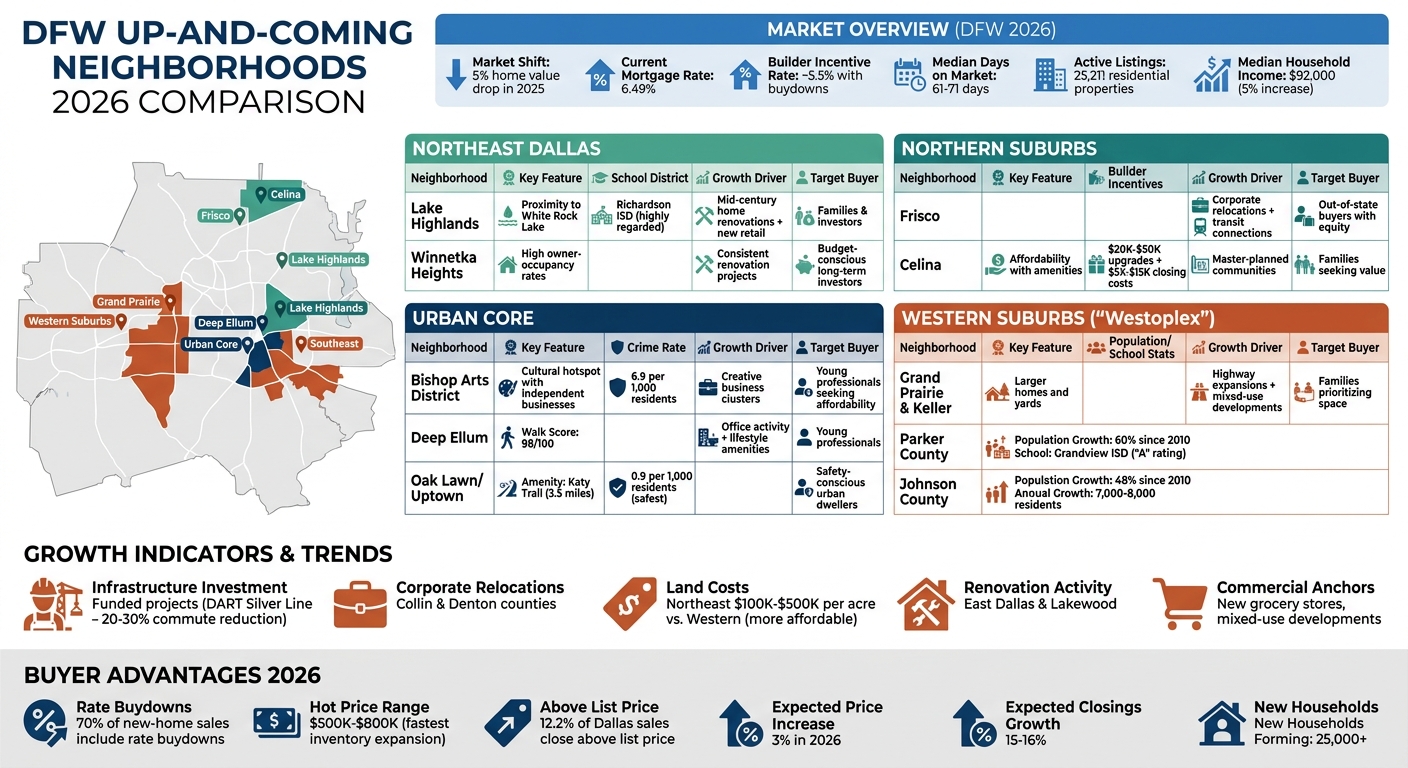
DFW Up-and-Coming Neighborhoods Comparison 2026: Key Stats and Growth Indicators
2026 Best Neighborhoods in Dallas Fort Worth Texas – Where People Actually Relocate To
sbb-itb-9bb2e84
What Makes a Neighborhood ‘Up-and-Coming’ in DFW?
Not every promising neighborhood lives up to the hype. In 2026, the Dallas-Fort Worth (DFW) market rewards buyers who rely on hard data instead of speculation. The neighborhoods showing real growth share specific, measurable traits – not just flashy marketing.
Signs of Neighborhood Growth
One of the strongest indicators of rising property values is infrastructure investment. New highways, expanded lanes, and transit upgrades make previously overlooked areas more accessible by cutting commute times. Public projects like parks, improved sidewalks, and better street lighting suggest a city is betting on the area’s future. Savvy buyers purchase before these projects are completed to maximize potential returns.
Corporate relocations can also transform neighborhoods almost overnight. When major employers move in or expand, rental demand surges first, followed by increased home-buying activity as employees settle into the area. This trend has been seen repeatedly across the Metroplex, especially near corporate campuses in Collin and Denton counties.
The "ripple effect" is another key factor. As home prices in popular suburbs like Frisco and Plano rise beyond many buyers’ budgets, nearby communities with similar commuting options become the next target. For example, areas like Garland near Richardson and Central Plano are now drawing buyers who want proximity to employment hubs without paying top-tier prices.
Real estate expert Kelly Reber notes: "The best opportunities near Dallas are not always obvious at first glance. Understanding where growth is happening quietly can help buyers make smarter decisions".
Renovation activity in older neighborhoods often signals shifting buyer interest. Areas like East Dallas or Lakewood see increased remodeling and flipping, which typically leads to sustained appreciation. Similarly, the arrival of commercial anchors – like new grocery stores, mixed-use developments, or cultural centers – often precedes a surge in residential demand. A great example is the Bishop Arts District, where creative business clusters have driven property values upward.
School performance remains a crucial factor for families. Smaller, high-performing districts like Grandview ISD, which has an "A" accountability rating, attract families seeking better education options. This focus on schools has contributed to the explosive growth in areas like Parker County, which has seen a 60% population increase since 2010, and Johnson County, which has grown by 48%, adding 7,000 to 8,000 residents annually.
These signs make it clear why early investments in these neighborhoods often lead to significant returns.
Why Buying Early Matters
Timing can make a huge difference – sometimes amounting to tens of thousands of dollars in equity. For instance, development-grade land in the northeast DFW corridor now ranges from $100,000 to $500,000 per acre, making it increasingly costly for both builders and buyers. In contrast, western ZIP codes still provide more affordable entry points.
Buying into a neighborhood before major projects are completed allows buyers to lock in current prices and reap future gains. The 2026 market favors those who actively monitor city agendas and track funded developments instead of chasing areas that have already peaked.
Broker Associate Dina Morales explains: "In 2026, success in Fort Worth real estate comes down to knowing where demand is concentrating – and why".
The 5% dip in DFW home values during 2025 has opened up opportunities in markets that previously experienced the highest appreciation.
DFW’s Growing Neighborhoods by Area
The Dallas-Fort Worth (DFW) area is buzzing with neighborhoods that are evolving rapidly, each offering unique opportunities for buyers. From family-friendly suburbs to vibrant urban districts, understanding the factors driving growth in these areas can help buyers find the right fit for their budget and lifestyle.
Northeast Dallas: Lake Highlands and Winnetka Heights
Lake Highlands is a magnet for families and investors, thanks to its proximity to White Rock Lake and the highly regarded Richardson ISD schools. The neighborhood features mid-century homes, many of which are undergoing renovations. Meanwhile, new retail and dining developments along major roads are boosting convenience without losing the community’s charm.
Winnetka Heights provides a more affordable option for buyers looking for long-term value. With high owner-occupancy rates and consistent renovation projects, the area offers stability and potential for appreciation. This makes it an attractive choice for those priced out of more expensive urban neighborhoods.
Southeast Dallas: Pleasant Grove
Pleasant Grove is gaining traction as a high-value option for first-time buyers and investors. Home prices here are lower than in central Dallas, but the area is becoming more accessible thanks to public transit upgrades and infrastructure projects. These improvements are cutting commute times and enhancing connections to downtown and major job hubs, setting the stage for steady property value growth.
Urban Core: Bishop Arts, Deep Ellum, and Oak Lawn
The Bishop Arts District in Oak Cliff has become a cultural hotspot, filled with independent restaurants, shops, and creative businesses. Its unique character and ongoing redevelopment make it an appealing and relatively affordable alternative to northern suburbs. Nearby, Deep Ellum and Oak Lawn are seeing renewed interest from young professionals. Increased office activity and lifestyle amenities are driving demand, and these neighborhoods’ walkability adds to their appeal, offering strong potential for property appreciation.
Northern Suburbs: Frisco, Celina, and Master-Planned Communities
The northern suburbs, including Frisco and Celina, are benefiting from corporate relocations and improved transit connections, which are cutting commute times and raising property values across Collin and Denton counties. Celina, in particular, is attracting buyers seeking affordability without sacrificing amenities. Master-planned communities in these areas are especially popular, offering family-friendly features like top-rated schools, local retail, and modern home designs. Out-of-state buyers, often armed with equity from pricier markets, are driving competition for new construction homes that require minimal immediate repairs.
Suburban Markets: Grand Prairie and Keller
The western side of the metroplex, often called the "Westoplex", is seeing a surge in development. Tarrant County, in particular, is experiencing steady growth in residential and industrial projects, creating more opportunities for entry-level and mid-range buyers compared to the tighter housing markets in Collin and Denton counties.
MetroTex notes: "This emerging growth corridor, sometimes called the westoplex, is attracting new residential communities, industrial development, and corporate expansion".
Grand Prairie and Keller are popular with families looking for larger homes and yards, even if it means a longer commute. Highway expansions and mixed-use developments tailored to these suburban areas are creating localized growth, making them a solid choice for buyers seeking long-term value.
How to Pick the Right Neighborhood
Finding the right neighborhood is about balancing what fits your budget today with what could grow in value tomorrow. Often, the best investments are in areas that are still developing but show clear signs of progress, like new infrastructure, corporate relocations, or rising interest in nearby neighborhoods that are becoming too pricey.
Price vs. Growth Potential
Look at nearby towns for better deals with similar perks. For example, if Frisco or Plano has become too expensive, places like Celina might offer comparable amenities and commute times at a lower cost. The trick is spotting areas where infrastructure projects are already funded and approved. Check city council meetings or transportation updates to confirm these plans.
When choosing a home, prioritize structural integrity over cosmetic appeal. A house with a solid roof, foundation, and working HVAC system is a better long-term investment than one with flashy finishes but hidden maintenance issues. Cosmetic updates are usually cheaper to tackle than major repairs.
Beyond the numbers, think about how the neighborhood fits your daily life.
Lifestyle Considerations
Walkability might matter more or less, depending on your routine. If you’re in a place like Deep Ellum, which boasts a Walk Score of 98/100, you can easily live without a car. In the suburbs, however, factors like school quality and recreational amenities take center stage. For families, neighborhoods with high owner-occupancy rates and top-rated schools tend to maintain strong demand over time.
Safety and access to outdoor spaces also play a big role. Uptown and Oak Lawn, for instance, report just 0.9 violent crimes per 1,000 residents, much lower than Bishop Arts, which has 6.9 per 1,000. Proximity to parks like the 3.5-mile Katy Trail or cultural attractions can significantly improve day-to-day living while also boosting long-term property values.
Working with Real Estate Professionals
Navigating the market is much easier with expert help. A seasoned agent can provide hyper-local insights that broader market reports might miss, like trends in days on market, rent prices, or new construction activity that reveal where demand is heating up. Agencies like Tom’s Texas Realty offer personalized consultations and access to off-market listings, giving buyers far more options than standard MLS searches. This can be a huge advantage, especially when competing with out-of-state buyers bringing equity from pricier markets.
Get a fully underwritten preapproval to make your offer stand out. In competitive situations, this can make your financed offer almost as appealing as cash. A good agent can also help negotiate terms beyond just price, like leasebacks or flexible closing dates, to meet sellers’ needs.
2026 Market Conditions: Current Buying Opportunities
The DFW housing market has shifted gears, moving away from the intense bidding wars of 2021–2022 to a more balanced phase where buyers have the luxury of time to weigh their options. As of May 2026, the total inventory stands at 767,132 units, with approximately 25,211 active residential listings. Homes now spend an average of 61 to 71 days on the market – quite a contrast to the post-pandemic period when properties often sold in mere hours. This shift has given buyers more leverage, thanks to the following incentives.
Buyers are enjoying newfound negotiating power. Nearly 70% of new-home sales this year include rate buydowns or incentives that bring mortgage rates down to around 5.5%, even though the 30-year fixed rate averages 6.49%. Builders are also offering enticing perks, such as $20,000–$50,000 in upgrades and $5,000–$15,000 in closing cost assistance, to move inventory. In areas like Celina, these offers are even more aggressive as builders aim to clear out completed homes before starting new construction phases.
In 2026, over 25,000 new households are forming, and the median household income has risen to about $92,000 – a 5% increase from the previous year. Home closings are expected to grow by 15–16%, with modest price increases of around 3%. This steady income growth and increased transaction activity point to long-term growth potential, especially in developing neighborhoods. While demand remains strong, it has become more aligned with supply. As Texas land developer Scott Finfer observed:
"DFW isn’t seeing a decline in demand. It’s digesting it… 2026 is shaping up to be the year this market reaccelerates".
Emerging neighborhoods are particularly attractive for buyers right now. A recent 5% dip in home values has made it easier for buyers to enter the market this year. The $500,000 to $800,000 price range – common in suburban areas experiencing growth – has seen the fastest inventory expansion and the most builder activity. On top of that, infrastructure upgrades like the DART Silver Line, which debuted in 2026, are cutting commute times by 20–30%, making new areas more accessible and boosting demand. These factors create excellent opportunities for buyers who act before prices begin to climb again.
Tom’s Texas Realty offers personalized consultations to help buyers navigate these opportunities. From professional advice to access to off-market listings – providing three times the options of standard MLS searches – working with experts can mean the difference between overpaying in a crowded area and finding great value in an up-and-coming neighborhood. This market reset underscores the strategic advantage for buyers ready to invest in areas poised for future growth.
Conclusion
Dallas-Fort Worth holds its position as the nation’s leading market for real estate investment and development for the second year in a row, heading into 2026. From Lake Highlands to Grand Prairie, this guide has highlighted neighborhoods brimming with potential for buyers who recognize that timing is everything. Broker Associate Evan Downey emphasizes that emerging neighborhoods often present lower entry prices, paving the way for substantial appreciation down the line.
With the market showing strong indicators of growth, making swift, informed decisions is more important than ever. Consider this: 12.2% of Dallas home sales are closing above the list price, with a median of just 41 days on the market. Buyers who focus on neighborhoods with funded infrastructure projects, reputable schools, and proximity to major employment hubs can position themselves to secure properties before prices climb further.
For those ready to act, having expert support is crucial. Tom’s Texas Realty offers access to off-market listings – tripling the options compared to standard MLS searches – and provides tailored consultations to pinpoint neighborhoods that match your budget, lifestyle, and investment goals. As discussed earlier, keeping an eye on funded projects and understanding the nuances of individual neighborhoods is key to uncovering hidden opportunities. Whether you’re buying your first home in Dallas, relocating professional, or seasoned investor, local expertise is a game-changer.
The opportunity to secure value in DFW’s up-and-coming neighborhoods is here. As Broker Associate Dina Morales puts it:
"The Fort Worth market isn’t slowing – it’s getting smarter… the best neighborhoods still move quickly".
Start exploring these promising areas today to position yourself for future gains.
FAQs
How can I verify a DFW neighborhood is truly up-and-coming?
To determine if a DFW neighborhood is on the rise, pay attention to a few telling signs. Look for rising property values, as this often signals growing demand. Check for new infrastructure projects, like improved roads or public transit expansions, which can boost accessibility and appeal. Improving safety is another key factor – lower crime rates can make an area more attractive to buyers and renters. Additionally, job growth in the area can drive more people to move there.
Neighborhoods with strong walkability and visible community improvements, such as parks or revitalized public spaces, often show promise. Dive into market reports and local trends to spot consistent price increases and active development. Together, these elements can paint a clear picture of a neighborhood’s potential for long-term growth.
Which DFW areas have the best upside under $800,000?
If you’re searching for neighborhoods in the Dallas-Fort Worth area with homes under $800,000 and promising growth, you’re in luck. Both new developments and established areas in the region offer exciting opportunities.
For those interested in new construction, neighborhoods like SoHo Square, Bayside, Cedar Branch, Sereno Oaks at Buckner Terrace, and Fireside by the Lake feature modern homes with plenty of potential for future appreciation.
Meanwhile, established communities such as Spring Creek, Prestonwood Estates, Prairie Creek, Canyon Creek, and Lake Highlands are known for their strong community vibe, quality schools, and ongoing revitalization efforts. These factors make them appealing for both current enjoyment and long-term value.
What buyer incentives are most common in 2026 – and how do I use them?
In 2026, buyers in the Dallas-Fort Worth area can take advantage of incentives like low or zero-interest loans, help with closing costs or down payments, and flexible move-in dates. These perks aim to make owning a home more attainable. To get the most out of these opportunities, buyers should consider negotiating with motivated sellers and partnering with real estate professionals, such as Tom’s Texas Realty. These experts can help pinpoint properties offering these benefits and guide buyers in crafting strong offers to maximize their savings.