

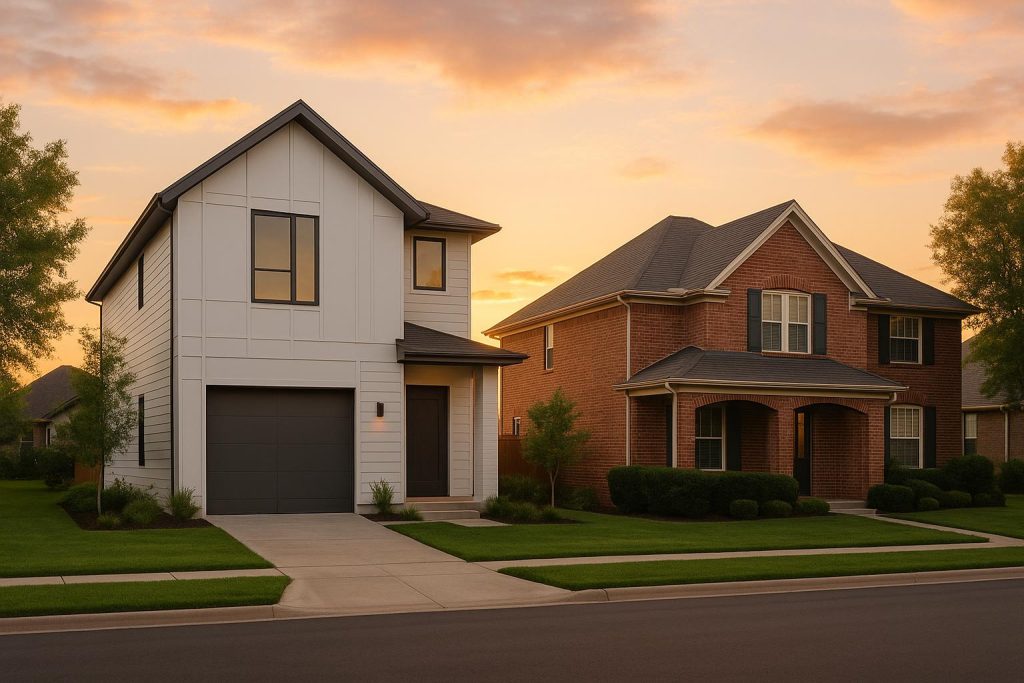
When deciding between new construction and existing homes in Dallas in 2025, here’s what you need to know:
- New Construction Homes: Median price is $401,800 (June 2025), which is 8% lower than existing homes. They offer modern designs, energy-efficient systems, warranties, and customization options. Builders often provide incentives like rate buydowns and closing cost assistance. Downsides include longer move-in timelines (6–10 months) and higher upfront costs.
- Existing Homes: Median price is $435,300. Found in established neighborhoods with mature landscaping, architectural charm, and faster move-in timelines (30–45 days). However, they may require higher maintenance costs and upgrades for energy efficiency.
Quick Comparison
| Feature | New Construction | Existing Homes |
|---|---|---|
| Median Price (June 2025) | $401,800 | $435,300 |
| Move-In Timeline | 6–10 months | 30–45 days |
| Maintenance Costs | Lower (warranties) | Higher (aging systems) |
| Energy Efficiency | Modern systems included | May need upgrades |
| Customization | High | Limited |
| Neighborhoods | New developments | Mature, established |
| Builder/Seller Incentives | Common | Rare |
Your choice depends on your priorities: modern features and long-term savings favor new construction, while charm and quick availability make existing homes appealing. With mortgage rates around 6.3%, pre-approval is key to navigating the market.
New Construction Homes in Dallas
The Dallas-Fort Worth area is seeing a surge in new construction homes, offering buyers a broad range of options to suit modern lifestyles. From diverse builders to varying price points and floor plans, the region provides plenty of choices for those looking to buy. This growing market comes with its own set of advantages and challenges, making it an exciting yet thoughtful decision for prospective homeowners.
Benefits of Buying New Construction
One of the biggest perks of new construction homes is their modern design and energy efficiency. Today’s Dallas homes often feature open-concept layouts, spacious primary suites, and dedicated home offices – perfect for contemporary living. On top of that, state-of-the-art appliances and advanced insulation can lead to noticeable savings on utility bills over time.
Another appealing aspect is the ability to customize. Many builders offer buyers the chance to tailor finishes, fixtures, and layouts to match their personal style, something that’s rarely possible with older homes. Plus, new construction homes typically come with warranties on systems and appliances, which can help you avoid the $2,500–$5,000 in repair costs often associated with resale properties. This combination of personalization and reduced maintenance makes new builds a practical option for many buyers.
Drawbacks of Buying New Construction
However, buying new construction isn’t without its downsides. One of the most notable is the price premium. New homes in Dallas often cost 5–10% more than comparable resale properties. For instance, a $400,000 resale home could equate to a $420,000–$440,000 price tag for a new build. Additionally, new homes may lack the charm and established landscaping found in older neighborhoods, which can impact curb appeal.
Builder Incentives and Financing
To stay competitive, many top builders in the Dallas-Fort Worth area – such as Highland Homes, Perry Homes, and D.R. Horton – are offering enticing incentives. These can include temporary rate buydowns and closing cost assistance, often covering 2–3% of the home’s purchase price. For a $400,000 property, this could mean savings of $8,000–$12,000. With mortgage rates currently around 6.3%, these incentives can make a real difference in early monthly payments. Some builders even offer design center credits, allowing buyers to upgrade finishes without additional expenses.
If you’re considering new construction, getting pre-approved with a local lender is a smart first step. Pre-approval strengthens your negotiating position and helps you understand your budget. Tom’s Texas Realty, for example, offers mortgage qualification services that won’t impact your credit score. With increased inventory and builder incentives, now could be a great time for first-time buyers to explore new construction homes that fit their needs and priorities.
Existing Homes in Dallas
The Dallas–Fort Worth area offers a homeownership experience that feels different from what you’d find in newer developments. Many of its mature neighborhoods are known for their tree-lined streets and homes with distinct architectural charm – perfect for anyone looking for a sense of character and community.
Here’s a closer look at what makes buying an existing home appealing, as well as some of the challenges that come with it.
Benefits of Buying Existing Homes
One of the biggest perks of purchasing an existing home is the established neighborhoods they’re often found in. Areas like Lake Highlands, Lakewood, and Oak Cliff boast mature landscaping, walkable streets, and a strong sense of community. These neighborhoods often have a personality that’s hard to replicate in newer developments.
Another factor to consider is the pricing landscape. While new construction has become more competitively priced in recent years, existing homes may still offer value – especially when you look beyond the sticker price to overall ownership costs. However, buyers should factor in potential expenses, such as renovations or energy-efficiency upgrades, when evaluating costs.
Timing is another advantage. With faster closing timelines, existing homes can often be ready in 30 to 45 days, compared to the 6 to 12 months it might take for new construction. This is a big plus if you’re relocating or need to move quickly.
Lastly, there’s the architectural variety that comes with older homes. From mid-century ranches to traditional two-story designs with unique built-ins, existing homes often have a level of individuality that new builds can’t match.
Drawbacks of Buying Existing Homes
Of course, buying an older home isn’t without its challenges. For one, maintenance and repair costs are often higher. Unlike new builds, which typically come with warranties for major systems and appliances, older homes may require costly updates sooner. Think HVAC systems, plumbing, or roofing – these are areas where expenses can add up quickly. Buyers might want to negotiate for a home warranty to offset some of these potential costs.
Another challenge is dealing with outdated systems. Older homes often lack the energy-efficient features found in newer builds, which could mean higher utility bills. Advanced insulation and energy-saving technologies are standard in new construction, but existing homes might need upgrades to achieve similar efficiency.
Then there’s the matter of limited personalization opportunities. Existing homes reflect the design choices of their previous owners, which might not align with your tastes. Renovations are often necessary to make the space feel like your own.
Resale Value and Market Competition
If you’re thinking about long-term value, it’s worth noting how existing homes perform in the resale market. Even though new construction now makes up about 43.1% of homes for sale in some top metros, existing homes still dominate the inventory. This often leads to competitive bidding in sought-after Dallas neighborhoods, with multiple offers becoming the norm.
To strengthen your position in such a market, securing pre-approval is essential.
When evaluating resale potential, consider the neighborhood’s trajectory. Signs of revitalization or improved local amenities can significantly impact property values and future returns. It’s these factors that often determine whether an existing home will be a solid investment over time.
Finally, keep in mind the challenge of finding reliable vendors for repairs and updates. Unlike new builds, where builders handle warranty-related issues, buying an older home means you’ll need to establish your own network of trusted service providers – a step that requires time and effort.
As you weigh your options, think about how timing, neighborhood dynamics, and your personal goals play into the decision. Each factor can make a big difference in finding the right home for your needs.
Cost Comparison: New Construction vs. Existing Homes
When weighing the decision between a new construction home and an existing property, understanding the financial details is key. Let’s break down the numbers and factors that influence lifetime costs.
Price and Cost Analysis
In 2025, the Dallas housing market reached an unexpected milestone: new construction homes became more affordable than existing ones. As of June 2025, the median price of a new home in Dallas was $401,800, while existing homes carried a median price of $435,300. That’s a difference of $33,500, or an 8% price advantage favoring new construction homes.
Why the disparity? Many existing homeowners are holding onto properties with ultra-low mortgage rates, driving up the prices of resale homes. Meanwhile, new construction homes often feature modern materials and systems, which help reduce utility bills over time compared to older homes with outdated infrastructure. Over the course of 10–20 years, these savings can add up to a significant amount.
Maintenance and repairs are another critical factor. New homes often come with warranties that cover major systems and appliances, sparing owners from unexpected repair bills. In contrast, older homes may require immediate attention to aging systems like HVAC units, electrical wiring, roofs, or plumbing. Additionally, builders frequently offer incentives – such as mortgage rate buydowns, closing cost assistance, or free upgrades – which can help lower upfront expenses.
Here’s a side-by-side comparison of the financial factors:
| Factor | New Construction | Existing Homes |
|---|---|---|
| Median Purchase Price (June 2025) | $401,800 | $435,300 |
| Maintenance Costs | Lower (modern systems with warranties) | Higher (aging systems may need repairs or replacements) |
| Energy Efficiency | Modern energy-saving systems included | May require costly upgrades to improve efficiency |
| Personalization | Extensive customization options during construction | Limited without expensive renovations |
| Builder/Seller Incentives | Common (rate buydowns, closing cost help, free upgrades) | Rare |
| Warranty Coverage | Included for major systems | Typically not included |
Another consideration is the timeline for moving in. While resale homes can close in about 30 days, new construction often requires 6–10 months to complete. This delay may necessitate temporary housing, adding to short-term costs.
For first-time buyers in Dallas, new construction often emerges as the more cost-effective option when looking at expenses over a 10-year span. Lower maintenance costs, reduced utility bills, and warranty protections all contribute to financial peace of mind . If you’re looking for personalized guidance, Tom’s Texas Realty (https://tomstexasrealty.com) offers expert advice tailored to the Dallas market.
sbb-itb-9bb2e84
Lifestyle Factors for Dallas Buyers
Once you’ve considered costs and construction details, it’s time to think about how factors like timelines, neighborhood vibe, and future goals influence your decision. The type of home you choose should align with your lifestyle and long-term plans.
Move-In Timeline
If you’re on a tight schedule, the timeline for moving in is a big deal. Existing homes typically close in about 30 days, making them a great option if you’re relocating, working around school schedules, or nearing the end of a lease. On the other hand, new construction requires more patience. With a build time of 6–10 months, you’re looking at a total timeline of 7–11 months before you can move in.
Neighborhood and Location
Where you live isn’t just about the house – it’s about the community that surrounds it. In Dallas, you have two main options to consider.
Established neighborhoods: These areas, often 20+ years old, come with a sense of history and stability. Think mature trees, well-maintained parks, and schools with solid reputations. Infrastructure like roads and shopping centers is already in place, and commute patterns are predictable. You can visit these communities multiple times to get a feel for the area and see if it matches your lifestyle.
Newer suburban developments: These are typically tied to new construction and offer modern conveniences. You’ll find contemporary home designs, smart features, energy-efficient systems, and amenities built for today’s needs. However, these areas are still evolving. Schools might be newer, local shopping options more limited, and the overall community character still in the making. Additionally, newer developments are often farther from major job hubs, potentially adding 15–20 minutes to your daily commute.
Future Plans and Investment Goals
Your future plans – whether focused on family, rental income, or long-term value – play a key role in choosing the right home.
For growing families, new construction homes are often the better fit. They feature open-concept layouts, flexible spaces for home offices, and modern bedroom designs that cater to today’s lifestyles. Plus, with newer systems and lower maintenance needs, you can avoid unexpected repair issues during the busy early years of family life.
For rental income, existing homes in established neighborhoods might be more appealing. These areas often have a steady demand from tenants who prioritize proximity to established schools, shopping, and entertainment.
For capital appreciation, new homes offer some advantages. Nationally, the price premium for new construction is relatively modest – just 7.8% as of Q2 2025. Combined with modern features and efficiencies, this makes new construction an attractive option for those looking to maximize value over time.
If you’re planning a short-term stay, new homes often win out with their lower maintenance needs and warranty coverage. For long-term investments, established neighborhoods provide market stability, while emerging communities offer growth potential.
Need help deciding? Tom’s Texas Realty (https://tomstexasrealty.com) specializes in matching buyers with the perfect home, whether you’re eyeing a brand-new build or a charming existing property in Dallas. Their local expertise ensures you’ll find the right fit for your lifestyle and goals.
Conclusion
Deciding between a new construction home and an existing property in Dallas ultimately comes down to what matters most to you. In June 2025, the average price for a new home was $401,800, compared to $435,300 for an existing home – a difference of about 8% in favor of new builds.
Each option has its own appeal. New construction homes often come with modern designs, energy-efficient systems, warranties, and opportunities for customization. On the other hand, existing homes typically offer the charm of established neighborhoods, mature landscaping, and the advantage of moving in faster – often within 30 days of closing.
Your decision should align with your budget, timeline, and lifestyle needs. If you’re looking for a quick move and value the character of a well-rooted community, an existing home might be the better fit. But if you’re willing to wait for the construction process and prioritize modern features and potential long-term savings, a new build could be the way to go. Builder incentives also make new construction an attractive option.
In 2025, the Dallas–Fort Worth housing market is more balanced than in previous years, giving buyers better negotiating power no matter their choice. To make the best decision, get pre-approved with a reliable lender, outline your priorities, and factor in the total costs of homeownership.
FAQs
What are the financial benefits of buying a new construction home compared to an existing home in Dallas?
New construction homes in Dallas come with several financial perks that make them an appealing choice. For starters, lower maintenance costs are a big draw. Since everything in the home is brand new and typically covered by warranties, you’re less likely to face surprise repair bills. Plus, modern homes often feature energy-efficient designs and appliances, which can help trim down your utility costs over time.
Another advantage is the opportunity for customization. You can select finishes, layouts, and features that match your budget and style, potentially saving you from expensive renovations down the road. On top of that, many builders sweeten the deal with incentives like assistance with closing costs or complimentary upgrades, making the upfront investment more manageable.
What are the differences in customization options between new construction and existing homes, and how could these affect buyers in Dallas?
When it comes to new construction homes, one big advantage is the ability to make them your own right from the start. Buyers can typically select floor plans, finishes, and even upgrades that suit their style and needs. However, this level of personalization often comes with a higher price tag and a longer timeline before you can move in.
In contrast, existing homes are sold as-is. While this means you can move in more quickly and might save money initially, any customization will require renovations or remodeling after the purchase. This can add time, effort, and potentially significant costs, depending on the scope of changes you want to make.
Ultimately, deciding between these two options in the Dallas market comes down to your priorities: do you want a home that’s ready to go, or are you willing to wait and invest more to create a space that’s uniquely yours?
What should buyers consider when deciding between a new construction home and an existing home in Dallas?
When deciding between a new construction home and an existing home in Dallas, it’s important to think about factors like your lifestyle, budget, and preferred location. New construction homes often come with modern designs, energy-saving features, and options for customization. However, they’re typically found in developing suburban areas, which might mean a longer commute or fewer nearby amenities.
On the flip side, existing homes often boast the character of established neighborhoods, mature trees, and closer proximity to schools, parks, and shops. That said, they might need some updates or renovations to meet your standards.
Take some time to reflect on what matters most to you – whether it’s a shorter commute, a tight-knit community, or lower maintenance costs. Both choices offer distinct perks, so the key is to pick the one that best fits your long-term vision and lifestyle.